
Shania Twain

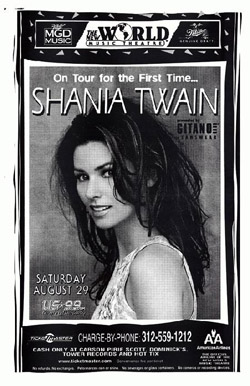


Shania Twain: The Woman Who Rewrote the Math of Country Music and Never Looked Back
Some artists break genres.
Shania Twain broke ceilings—and then taught the industry how to count again.
Before Shania, country success had rules. After Shania, those rules looked optional. She didn’t water country down. She widened it. She didn’t ask pop for permission. She brought her own audience and dared pop to keep up.
For musicians, Shania Twain isn’t a crossover curiosity. She’s a case study in authorship, confidence, and the discipline it takes to make bold choices sound inevitable.
What follows is an authentic career arc and 22 musician-level realities that artists, writers, producers, and bandleaders still analyze when they want to understand how a sound becomes a movement without losing its spine.
Early Years: Steel Before Shine
1. Shania learned survival before stardom
She sang to keep the lights on. That urgency shaped her work ethic forever.
2. She grew up on multiple musical languages
Country, rock, pop, folk. Switching codes became second nature.
3. Her voice developed around strength, not fragility
Projection, clarity, and stamina mattered more than ornamentation.
4. She understood audiences before executives
Crowd response trained her instincts early.
The Partnership: Precision Meets Vision
5. Working with Mutt Lange was a structural shift
Songs became engineered for impact without losing personality.
6. Hooks were treated like architecture
Verse discipline. Chorus inevitability. No wasted seconds.
7. Guitars were mixed for muscle, not twang
Tone choices widened the door without abandoning roots.
8. Vocals were stacked for authority, not sweetness
Power came from mass, not decoration.
The Sound: Why It Hit Everywhere
9. Shania sang with conversational confidence
Listeners felt addressed, not serenaded.
10. She phrased slightly ahead of the beat
Momentum lived inside the line delivery.
11. Lyrics spoke directly to agency
Not longing. Not apology. Ownership.
12. Choruses arrived early and stayed memorable
Pop mechanics used without shame.
Come On Over: The Earthquake
13. Come On Over wasn’t chasing radio—it overwhelmed it
Songs worked in clubs, trucks, kitchens, and stadiums.
14. Visual identity reinforced musical authority
Image amplified message instead of distracting from it.
15. She centered women without narrowing the audience
Specificity expanded reach.
16. The record proved confidence scales
Certainty reads louder than genre labels.
Live Shania: Control at Scale
17. Stadium pacing was deliberate
Energy waves mattered more than constant intensity.
18. Keys and arrangements protected stamina
Longevity planned into the setlist.
19. The band served groove and clarity
Nothing crowded the vocal narrative.
Interruption and Return
20. Vocal injury forced reinvention, not retreat
Adaptation preserved identity.
21. She returned without chasing her past self
Authority replaced urgency.
The Lasting Lesson
22. Shania Twain proved expansion doesn’t require permission
It requires conviction.
Why Shania Twain Still Matters to Musicians
Shania teaches a lesson the industry still wrestles with.
You can honor a genre while refusing its limitations.
You can be accessible without being diluted.
You can lead with confidence and bring everyone along.
She didn’t adapt by softening her voice or shrinking her vision.
She adapted by trusting her instincts—and backing them with discipline.
In a music economy still debating what belongs where, Shania Twain remains definitive proof that when the songs hit, the rules move out of the way.
And every artist bold enough to widen their lane without apologizing is still following the path Shania Twain carved—clear-eyed, loud-hearted, and absolutely certain of where she stands.
