



Rush: What Musicians Really Miss About the Most Relentless Band in Rock
Most bands are remembered for songs.
Rush is remembered for standards.
Among working musicians, touring artists, bandleaders, techs, and session killers, Rush occupies a rare category. Not heroes. Not myths. Benchmarks.
Below are 22 facts and realities about Rush that musicians actually talk about when the amps are off and the road cases are open. Not trivia. Craft. Discipline. Survival.
1. They rehearsed like a pit orchestra, not a rock band
Rush rehearsals were notoriously strict. Mistakes were stopped and fixed immediately. No “vibe-through-it” mentality. Precision was non-negotiable.
2. Neil Peart practiced on tour every single day
Even on off-days. Even after shows. He treated chops like conditioning, not talent. Many drummers cite this as the moment they realized professionalism beats inspiration.
3. Geddy Lee sang lines no producer would greenlight today
High register. Long phrases. No pitch correction. No vocal doubles to hide behind. He delivered it live while playing complex bass lines and foot pedals.
4. They ran click tracks without sounding mechanical
Rush used time references sparingly and musically. Tempos breathed, but never drifted. That balance is harder than playing free or locked.
5. Alex Lifeson built guitar parts around negative space
Many riffs are intentionally incomplete. He left room for bass, synths, and drums to speak. Guitarists studying arrangement still analyze this.
6. They turned odd time signatures into crowd moments
Seven, nine, eleven. Rush made them groove. That’s arrangement mastery, not math flexing.
7. They controlled their own sound before it was fashionable
Rush pushed for consistency in PA, monitoring, and stage volume decades before “silent stages” and in-ear culture.
8. Their techs were long-term collaborators
Rush techs stayed for years, sometimes decades. Gear familiarity was treated as part of the instrument.
9. They never improvised to hide mistakes
If something went wrong, they corrected it musically without extending solos or vamping. Discipline over ego.
10. They tracked albums fast for a progressive band
Many Rush records were cut more quickly than bands playing far simpler material. Preparation replaced studio indulgence.
11. Neil Peart rewrote lyrics relentlessly
He treated words like architecture. Drafts were torn apart. Nothing landed accidentally.
12. They avoided drug culture intentionally
Not as a moral flex. As a performance strategy. Consistency required clarity.
13. They respected the audience’s intelligence
Rush never “simplified for radio” when writing live material. They assumed listeners would rise to the challenge.
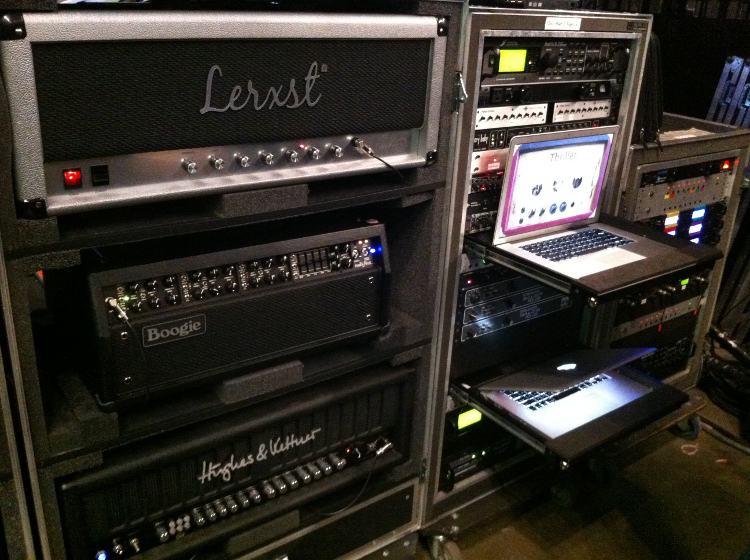
14. They carried redundant rigs long before redundancy was standard
Backups for backups. If something failed, the show did not.
15. Geddy Lee balanced tone across eras instead of chasing trends
From Rickenbacker grind to Jazz bass clarity to synth bass layering, tone decisions followed songs, not fashion.
16. Alex Lifeson embraced effects as orchestration, not gimmicks
Chorus, delay, modulation were compositional tools, not frosting.
17. They never played shorter sets to preserve mystique
Rush shows were long, demanding, and consistent. Fans knew they’d get full value every night.
18. Neil Peart adjusted parts as his body aged
He rewrote drum parts to preserve feel without sacrificing musical intent. Many drummers ignore this reality until it’s too late.
19. They paid attention to venue acoustics
Setlists and arrangements shifted subtly based on room size and decay. Few rock bands admit to doing this.
20. They never replaced a member
No touring subs. No brand extensions. Rush was three people or nothing.
21. They exited on their own terms
No farewell cash grab. No forced continuation. They stopped when they could still execute at a high level.
22. They proved musicianship can be the brand
No personas. No theatrics. No controversy marketing. Just relentless execution over decades.
Rush mattered because they worked like engineers and felt like poets.
Geddy Lee showed bassists they could lead without posturing.
Alex Lifeson showed guitarists restraint could be dangerous.
Neil Peart showed drummers that intellect and physicality are not opposites.
In an era where AI can imitate tone, structure, even style, Rush remains stubbornly uncloneable. Not because of complexity alone, but because their music came from systems built over time. Human systems. Rehearsal. Accountability. Respect for craft.
Rush didn’t win by being louder than the room.
They won by being prepared for it.
And for musicians still trying to survive and thrive in the wild American music economy, that lesson might be the most radical one left.
