
Ella Fitzgerald

Ella Fitzgerald: The Strongest Instrument in the Room Never Needed to Raise Its Voice
Some singers demand attention.
Ella Fitzgerald earned it by never forcing a note.
Ella didn’t arrive with drama, mythology, or menace. She arrived with control so complete it felt supernatural. No grit-as-a-gimmick. No pain-as-performance. Just an instrument so disciplined, so elastic, so honest that musicians still talk about her the way engineers talk about perfect machines—quiet awe, zero exaggeration.
For musicians, Ella Fitzgerald isn’t style. She’s infrastructure.
What follows is an authentic career arc and 22 musician-level truths that singers, bandleaders, arrangers, and improvisers still study when they want to understand what mastery actually sounds like.
Early Years: Survival Before Sophistication
1. Ella learned resilience before technique
Orphaned young, she sang to survive emotionally before she sang professionally. That grounding never left her tone.
2. She won audiences before she won contracts
Live performance came first. Approval followed.
3. Her time feel developed before her range
Swing mattered more than notes. That priority shaped everything.
4. She listened obsessively to instrumentalists
Trumpets, saxophones, drummers. Her phrasing came from horns, not vocal tradition.
Chick Webb Era: The Furnace
5. Singing with Chick Webb taught her precision
Big band discipline forced clarity. No hiding. No dragging.
6. She learned to cut through loud arrangements without shouting
Placement beat volume every time.
7. The band trained her internal clock
Swing became reflex, not effort.
8. She respected the chart but trusted her instincts
Structure guided her. Feel defined her.
The Voice: Why Musicians Lose Their Minds
9. Ella’s pitch was terrifyingly accurate
Not sterile. Alive. Flexible. Locked.
10. Her tone stayed pure across registers
No gear change between chest and head. Seamless transitions.
11. She could sing complex lines without tension
Muscle efficiency is the hidden skill singers envy most.
12. Breath control governed everything
Phrases landed because air was managed, not forced.
Scat Singing: Improvisation at the Highest Level
13. Ella treated scat like bebop language
Motifs. Development. Callbacks. Nothing random.
14. She quoted other musicians mid-solo
A sign of deep listening and respect.
15. Her rhythm never collapsed during invention
Swing survived risk. That’s elite musicianship.
16. She could out-swing entire rhythm sections
And often did.
The Songbooks: Control Meets Freedom
17. The American Songbook recordings set a permanent standard
Arrangers learned restraint because Ella didn’t need ornamentation.
18. She honored melody before ego
Songs remained recognizable even when she stretched them.
19. Lyrics were delivered with conversational clarity
No melodrama. Meaning spoke for itself.
Live Ella: Authority Without Aggression
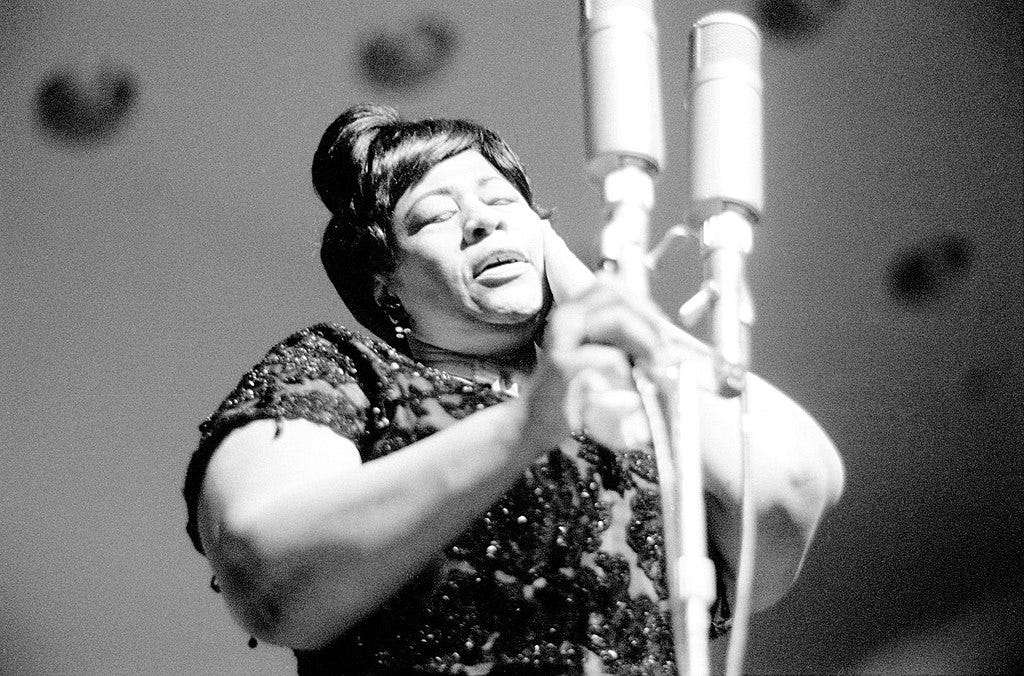
20. She commanded rooms without theatrics
Stillness became power.
21. Mistakes turned into opportunities
Dropped lyrics became improvised genius. Panic never entered the room.
The Long Arc
22. Ella Fitzgerald proved longevity comes from respect—for the music and yourself
No scandal cycle. No burnout theatrics. Just sustained excellence.
Why Ella Fitzgerald Still Matters to Musicians
Ella teaches the lesson most artists resist.
Ease is not laziness.
Clarity is not simplicity.
Joy is not weakness.
In a music industry obsessed with personality, Ella Fitzgerald remains radical because she let the music be the spectacle. She trusted swing to do the heavy lifting. She trusted craft to carry emotion. She trusted audiences to listen.
She didn’t adapt by changing who she was.
She adapted by getting better every decade.
And every singer trying to disappear into the pocket, every improviser chasing freedom without chaos, every bandleader who wants elegance without ego is still working in the space Ella Fitzgerald made permanent—clean, swinging, and impossibly human.
